Miss Havisham and Estella
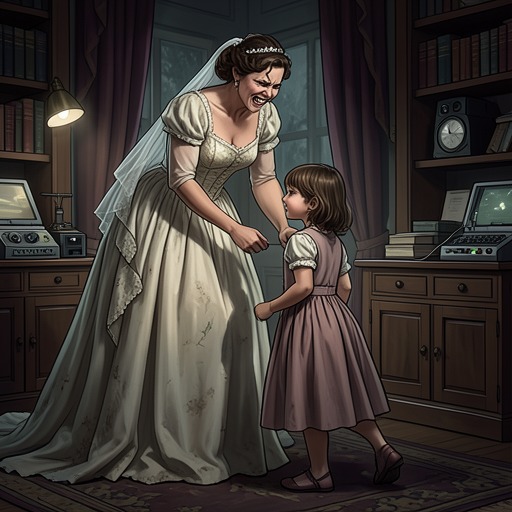
Great ExpectationsMiss Havisham and Estella’s relationship joins genuine attachment to deliberate emotional formation: Miss Havisham adopts and educates Estella, but makes her beauty and social power instruments of revenge, then expects an intimate devotion her upbringing has not enabled. Their bond moves from a carefully staged childhood lesson to a direct reckoning in which Estella names Miss Havisham’s responsibility for the person she has become.
Adoption and the First Lesson
Miss Havisham tells Pip that Estella is not related to her by blood but is her adopted daughter. She had spent a long time shut away at Satis House when she asked for a little girl to rear, love, and save from her own fate. She had previously summoned a man to lay the place waste; after reading about him in the newspapers, she asked him to find an orphan. He brought the sleeping child to her one night, when Estella was two or three, and Miss Havisham gave her the name Estella. The child was told only that she had been left an orphan and adopted.
From the first, Miss Havisham presents Estella as both a beloved child and a figure formed for a purpose. When Pip visits as a boy, she places a jewel against Estella’s breast and hair, tells her that it will one day be hers, and asks her to play cards with him. Estella objects that Pip is a common labouring boy. Miss Havisham’s reply turns the game into an early lesson in emotional harm: she instructs Estella to beggar him, and Pip understands that she wants the girl to break his heart. The scene establishes a pattern that will define their relationship: Miss Havisham directs Estella’s conduct while treating the pain it causes as part of the design.
Love, Possession, and Revenge
As Estella grows, Miss Havisham’s attachment becomes intense and possessive. During one visit, she watches Estella leave and kisses her own clenched hand with ravenous intensity. Alone with Pip, she draws him close and urges him repeatedly to love Estella whether Estella favours him or wounds him. She explains that she adopted, bred, and educated Estella to be loved. The repeated demand reveals the contradiction at the centre of her plan: she has cultivated Estella as an object of romantic devotion while also training her to use emotional distance against men.
Miss Havisham’s affection is not simply absent or false; it is bound up with jealousy, injury, and the expectation that Estella’s life will answer the older woman’s own heartbreak. On a later visit, Miss Havisham watches Estella’s beauty, words, and gestures as if consumed by them, while pressing her to report the men she has attracted. Pip interprets the arrangement as revenge: Estella is sent out to attract and torment men, while Miss Havisham assures herself that those who fall for her will lose. He believes Estella is being kept from him until she has served that purpose. His interpretation underscores how the adoption gives Miss Havisham the power to direct Estella’s social and romantic life, even as Estella’s feelings remain beyond her command.
Miss Havisham also makes Estella’s future part of an ongoing plan. Estella tells Pip that she must write regularly to Miss Havisham, visit her, and report how she is getting on; the jewels are nearly all hers. Estella’s first use of Pip’s name is deliberate, and she knows he will treasure it. The detail reflects the unequal emotional field in which the young woman has been raised: even a small sign of personal recognition can carry great weight for Pip, while Estella remains expected to report her life to the woman who formed her.
The Confrontation Over Her Upbringing
The relationship’s first open opposition occurs when Estella begins to detach herself from Miss Havisham’s grasp. Miss Havisham accuses her of being tired of her and reproaches her coldness. Estella answers that she is what Miss Havisham has made her, assigning her adoptive mother responsibility for both her successes and failures. She acknowledges that she owes Miss Havisham everything, but rejects the idea that gratitude and duty can produce a feeling she was never given the means to return.
Miss Havisham insists that she gave Estella a consuming love, yet Estella distinguishes that attachment from the love Miss Havisham demands. She has not forgotten Miss Havisham’s injuries or their causes, she says, and has not been unfaithful to her schooling. Her answer makes clear that she understands her education not as neutral care but as a set of purposes imposed from childhood. She did not participate in the arrangement that shaped her; if she could walk and speak when it was made, she says, that was the extent of her part in it.
Estella explains the consequences through an image of daylight. If a child were confined in darkness and then expected to understand the daylight, the expectation would be unreasonable; more pointedly, if she had been taught from the beginning to regard daylight as an enemy, she could not be expected to welcome it naturally. The comparison gives form to her central claim: Miss Havisham cannot train her to distrust love and then demand that she respond with spontaneous tenderness. Estella concludes that she must be taken as she has been made, and that her successes and failures together constitute the person she is.
Separation, Regret, and Recognition
Miss Havisham’s demand for love ends not in reconciliation through submission but in a painful recognition of what her methods have produced. After Estella’s explanation, Miss Havisham sinks among the faded bridal objects in the room. Pip leaves them briefly and later finds Estella beside her, taking stitches in one of the old dresses. The scene does not erase their conflict, but it shows them in the familiar roles of adoptive mother and daughter after Estella has spoken plainly about the limits of their bond.
Years later, Miss Havisham asks Pip to write beneath her name that he forgives her. He tells her he can do so, acknowledging the mistakes and ingratitude in his own life. She kneels at his feet and weeps, then asks what she has done. In recounting Estella’s origins, she again identifies herself as the person who chose to adopt and raise her. The confession confirms that Estella’s formation was part of a conscious effort to save a child from Miss Havisham’s fate, but the earlier confrontation has already exposed the contradiction: the attempted rescue also made Estella an instrument of the older woman’s unresolved injury.
The revelation of Estella’s parentage later changes the family history behind the adoption. Miss Havisham had taken her in as an orphan, while Estella’s biological father had once loved and lost her; near his death, Pip tells him that the child survived, became a lady, and is beautiful. This disclosure does not undo the adoptive bond or the harm of its design. Instead, it distinguishes the care and protection conveyed by adoption from the revenge-driven education Miss Havisham imposed, and makes Estella’s identity the result of both the family history hidden from her and the upbringing she finally names as her mother’s responsibility.
Narrative Significance
The relationship exposes the difference between possessing a child and understanding her. Miss Havisham can choose Estella’s name, education, jewels, visits, and reports, but cannot make the emotional response she demands follow from those arrangements. Estella’s measured replies resist the idea that gratitude obliges her to supply a feeling her upbringing did not nurture. Their conflict therefore gives the novel a clear account of how an adult’s unresolved past can shape a child’s future without determining the child’s inward consent.
The bond also reverses the appearance of its central terms. Miss Havisham calls her demand love, yet links it to jealousy, injury, and revenge; Estella appears cold, yet her explanation identifies that coldness as a consequence of her education rather than an innate choice to hurt her adoptive mother. The adoption begins as an act intended to rescue an orphan, but the relationship that follows is compromised by the purpose attached to the rescue. Estella’s insistence that she is what Miss Havisham made her gives the relationship its decisive meaning: care can create obligation and attachment, but it cannot guarantee reciprocal love when it has also trained its recipient to withhold it.